How to Grow an Email List from Scratch in the UK: The Complete Beginner Guide
You can grow an email list from scratch in the UK without a big audience, a big budget or any technical skill. You need one clear reason for people to join, a simple sign-up form that follows the UK rules, and a few places where the right people already find you. This guide walks through the whole process in order, from the legal basics to your first welcome email.
An email list is a list of people who have asked you to email them. Unlike social media followers, you own the list. No algorithm decides whether your message reaches them, and no platform can take the audience away. For a small business, that control is the whole point.
Why an email list is worth building (and why social followers are not enough)
Social media is rented land. You can build a large following on Instagram, Facebook or LinkedIn, but you do not control who sees your posts. Reach falls when the platform changes its rules, and your account can be restricted or closed without warning. Your followers are the platform’s users first and your audience second.
An email list works differently. Every subscriber has given you their address and asked to hear from you. When you send an email, it lands in their inbox. They may not open it, but nothing stands between you and them except the quality of what you send.
Email also converts better than social media for most small businesses. A subscriber has already shown interest by signing up. A follower has only tapped a button. That difference shows up in sales, bookings and repeat visits. A list of 200 engaged subscribers is worth more than 2,000 followers who never see your posts.
There is one more reason to start now. A list grows slowly at first and faster later, because every new subscriber can share your emails and every new piece of content can bring in more sign-ups. The businesses with useful lists in two years are the ones that started with ten subscribers today.
The UK rules first: GDPR, PECR and the soft opt-in (what you must get right)
Before you collect a single email address, get the legal basics right. This section is general information, not legal advice. The regulator is the Information Commissioner’s Office (ICO), and its guidance on electronic mail marketing is the place to check the current rules.
Two laws matter. The UK GDPR controls how you collect, store and use personal data, including email addresses. The Privacy and Electronic Communications Regulations (PECR) control direct marketing by email and text. Both apply, and both are enforced by the ICO.
Consent is the normal rule
In most cases, you need a person’s consent before you send them marketing emails. Consent must be freely given, specific and clear. The person must take a positive action, such as ticking an unticked box or filling in a form. Pre-ticked boxes do not count as consent, and neither does silence.
Your sign-up form should say plainly what the person will receive and how often. Keep a record of when and how each person joined, including the wording they saw. If someone complains, that record is your proof that they agreed.
The soft opt-in: the one exception
There is one exception, called the soft opt-in. It applies when you have already sold something to a customer, or negotiated a sale with them, and you collected their email address during that process. You can then email them about similar products or services, as long as you gave them a clear chance to opt out when you collected the address and you give them an opt-out in every message.
The soft opt-in only covers your own similar products and services. It does not cover people who only enquired, people who downloaded a free guide without buying, or addresses you found elsewhere. It also does not cover marketing to sole traders and some partnerships in the same way as it covers companies, so check the ICO guidance for your exact situation.
The Data (Use and Access) Act 2025 made some changes to these rules, including extending the soft opt-in to charities. The ICO has said its guidance is under review as the changes take effect, so check the ICO website before you launch if you want the latest position.
Every email must carry an unsubscribe link
Every marketing email you send must include a clear and easy way to unsubscribe. Make the link obvious and honour opt-outs quickly. A subscriber who cannot unsubscribe easily will mark your email as spam instead, and that damages your deliverability for everyone else.
Never buy an email list
Buying an email list is a bad idea in the UK for two reasons. First, the people on it never consented to hear from you, so emailing them breaks the consent rules. Second, bought lists are full of old, wrong and spam-trap addresses. They destroy your open rates, push your emails into spam folders and can get your sending account suspended. Build your list one real subscriber at a time.
Step 1: pick your email platform (what to look for, free tiers)
You need an email marketing platform before you collect addresses. Sending bulk email from a personal Gmail or Outlook account is a mistake. It breaks the rules of those services, it looks unprofessional and it gives you no way to manage consent, unsubscribes or bounces.
A good platform for a beginner should do five things. It should offer sign-up forms and landing pages, record consent, handle unsubscribes automatically, let you segment your list, and show you open and click rates. Most well-known platforms do all of this, even on their free plans.
Free tiers change often, so check the current limits before you choose. As a rough guide at the time of writing, Mailchimp’s free plan covers up to 500 contacts, MailerLite’s free plan covers up to 1,000 subscribers, Brevo’s free plan allows a limited number of emails per day with unlimited contacts, and Kit (formerly ConvertKit) offers a free plan for up to 1,000 subscribers. Substack and Beehiiv are free to start for newsletter-style lists, with fees taken only when you charge for paid subscriptions.
Pick based on what you will actually do. If you sell products online, pick a platform with good ecommerce links. If you write a newsletter, pick one built for writing and simple publishing. If you want automation later, pick one with a clear upgrade path. Do not overthink this step. The platform matters far less than the quality of your offer and your consistency. You can move your list later, and a good platform will let you export your subscribers at any time.
Step 2: create a lead magnet people actually want
A lead magnet is the free thing you offer in exchange for an email address. It is the single biggest factor in how fast your list grows. People do not sign up for “our newsletter”. They sign up for something useful, specific and immediate.
The best lead magnets share three traits. They solve one problem quickly, they relate directly to what you sell, and they are small enough to produce without a large budget. A 30-page ebook fails on all three counts. A one-page checklist passes all three.
Lead magnet ideas that work for UK small businesses include a price guide or cost breakdown, a seasonal checklist, a short template or spreadsheet, a five-day email course, a discount code for a first order, and early access to a new product or service. A plumber might offer a boiler servicing checklist. An accountant might offer a tax-year-end checklist. A coach might offer a five-day email course.
Make the offer specific. “Get our free guide” tells the visitor nothing. “Get the 2026 self-employed tax checklist” tells them exactly what they will receive and who it is for. Test different offers over time and keep the one that converts best.
Deliver the lead magnet immediately and automatically. Your platform should send it in the first email, seconds after someone signs up. If a subscriber has to wait or chase you for it, you have broken the first promise of the relationship.
Step 3: put sign-up forms where people will see them
A good lead magnet needs to be seen. Put sign-up forms where your visitors already show interest, not where you hope they will look.
The best places on a website are the homepage, the end of your most popular articles, a dedicated landing page for the lead magnet, and the contact page. A form in the footer catches very few people on its own, because few visitors scroll that far. A form at the end of a helpful article catches the people who have just found your advice useful, which is exactly when they are most likely to sign up.
Keep the form short. Name and email address is enough to start. Every extra field reduces sign-ups. You can ask for more detail later, once the person trusts you.
Pop-ups can work, but use them with care. An exit-intent pop-up, which appears as a visitor is about to leave, is less annoying than one that appears after five seconds. A pop-up that appears on every page, every visit, will drive people away. Set it to show once per visitor and only on pages where it makes sense.
Use double opt-in if your platform offers it. Double opt-in means the subscriber clicks a confirmation link in an email before they join your list. It keeps your list clean, because only real addresses with real owners get added, and it creates a clear consent record. A few people will not confirm, but the ones who do are far more engaged.
Step 4: use your website, social media and offline touchpoints
Your website is not the only place to find subscribers. Use every place where people already meet your business.
On social media, link to your sign-up page instead of asking people to follow you. A link in your bio, a pinned post about your lead magnet, and a short post each time you publish something useful will bring steady sign-ups. Do not rely on social media alone. Use it to send people to a list you own.
Offline touchpoints matter just as much. If you meet customers in person, at markets, events or in a shop, ask them if they would like to join your list. A QR code on a receipt, a card or a till sign can send them to your sign-up page in seconds. A clipboard at an event works too, as long as the wording makes clear what they are signing up for and you enter the details promptly.
Ask your existing customers first. People who have already bought from you are the cheapest and most responsive subscribers you will ever get. Send them a short, plain message offering something useful in exchange for joining, or add an unticked opt-in box at checkout. Remember the soft opt-in rules: having a customer’s email address does not mean you can add them to your newsletter without asking, unless the soft opt-in conditions apply.
Guest posts, podcast appearances and collaborations with other small businesses can also bring subscribers. Offer the host’s audience something useful, and link to a sign-up page built for them. One good guest post can add more subscribers than a month of social media posts.
Step 5: write a welcome email that keeps people subscribed
The first email a subscriber receives is the most important one you will ever send. Engagement is highest in the first few days, and the welcome email sets the tone for everything that follows.
A good welcome email does three things. It delivers the lead magnet immediately, it tells the subscriber what to expect and how often, and it sounds like a real person. Thank them, keep it short, and say plainly what will arrive next. Ask them to reply with their biggest question, because replies improve deliverability and start a conversation.
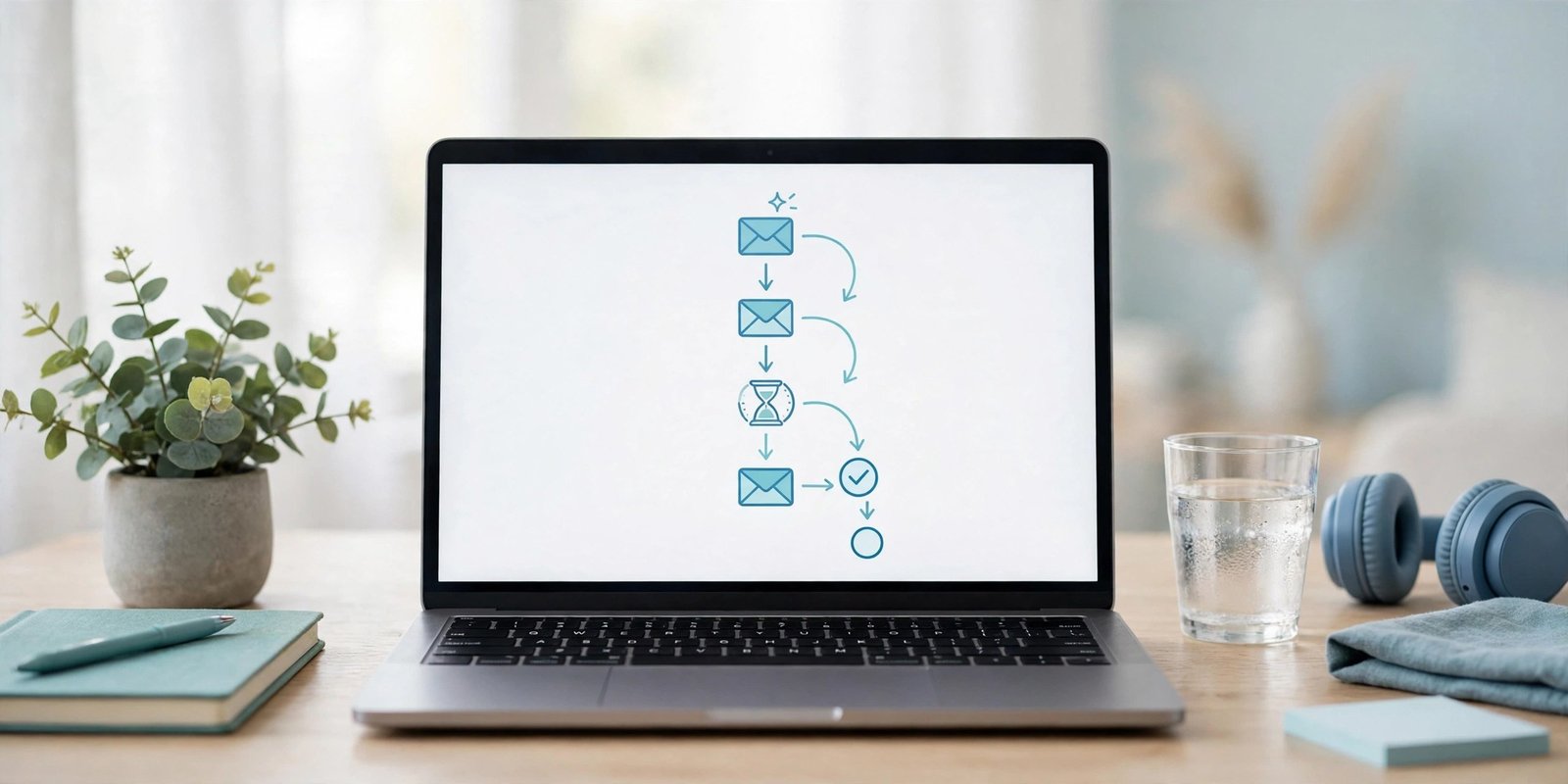
Follow the welcome email with a short sequence. A simple four-email sequence works well. The first email delivers the lead magnet. The second, two days later, shares your most useful piece of content. The third, two days after that, tells your story and explains what you do. The fourth introduces your product or service briefly, without pressure. After that, move the subscriber onto your regular emails.
Send regularly once the sequence ends. Weekly or fortnightly is sustainable for most small businesses. Pick a rhythm you can keep for a year. A list that hears from you once a month is better than one that gets five emails in a week and then nothing for three months.
Step 6: keep your list clean (and why bought lists will hurt you)
A clean list is a healthy list. Over time, some subscribers will stop opening your emails. Others will change address or lose interest. Keeping them on the list hurts you, because email providers watch engagement. If a large share of your list never opens your emails, your messages are more likely to land in spam for everyone else.
Watch three numbers. Your open rate is the share of subscribers who open an email. Your click rate is the share who click a link. Your bounce rate is the share of emails that cannot be delivered. As a rough guide, a healthy open rate for a small business list is usually 30 to 40 percent, and a bounce rate above 2 percent is a warning sign.
Remove hard bounces straight away. A hard bounce means the address does not exist, and your platform should remove it automatically. Soft bounces, such as a full inbox, are temporary, but an address that soft-bounces repeatedly should go too.
Run a re-engagement campaign once or twice a year. Send a short email to subscribers who have not opened anything in six months, asking if they still want to hear from you. Remove anyone who does not respond. Your list will get smaller and your open rates will go up. That is a good trade.
Segment your list as it grows. Segmentation means splitting subscribers into groups, such as customers and prospects, or people interested in different services. A short email to the right group always beats a long email to everyone.
How fast can you grow? Realistic numbers for a small business
Growth is slow at first, and that is normal. A new website with modest traffic might add 10 to 30 subscribers a month with a good lead magnet and visible forms. A site with 500 visitors a month might add 15 to 50. These are rough figures, not promises. Your conversion rate depends on your traffic, your offer and how prominently you promote it.
Judge your list on engagement, not just size. A list of 100 subscribers with a 45 percent open rate is more useful than a list of 1,000 with a 10 percent open rate. Churn matters too. A healthy list loses a small share of subscribers every month through unsubscribes, and that is fine. People leaving quietly is better than people marking you as spam.
Growth compounds. Every article you publish can bring new sign-ups. Every subscriber can forward your emails. Every guest post and event adds a few more. After a year of steady work, a small business can realistically have several hundred engaged subscribers. That is enough to fill a workshop, launch a product or bring in repeat bookings.
Common mistakes that kill a new email list
Most new lists fail for avoidable reasons. The first is asking people to join with no reason. “Sign up for our newsletter” is not an offer. Give people something specific and useful.
The second is emailing people who never agreed. Adding customers, contacts or business card addresses without consent breaks the UK rules and fills your list with people who will mark you as spam.
The third is disappearing. A subscriber who hears nothing for three months will forget who you are, and your next email will look like spam. Send on a schedule you can keep, even if that schedule is only once a month.
The fourth is sending only sales messages. A list that only hears about offers will shrink fast. Mix useful content with the occasional offer, and make the ratio work for your readers, not just for you.
The fifth is ignoring the numbers. If your open rate falls, something is wrong. Check your subject lines, your send time, your list hygiene and whether your emails still match what you promised at sign-up.
Frequently asked questions
How do I grow an email list from zero?
Start with people who already know you, such as existing customers and enquirers, and ask them to join with a clear offer. Then create one lead magnet, put a sign-up form on your website, and promote it on social media and in person. Expect a slow start. The first 100 subscribers are the hardest, and the next 100 come faster.
Is it legal to buy an email list in the UK?
Buying a list is not a legal shortcut. The people on it never consented to hear from you, so emailing them breaks the UK GDPR and PECR consent rules. Bought lists also damage your deliverability and can get your sending account suspended. Build your list yourself, one subscriber at a time.
What is the best free email marketing tool?
There is no single best tool, but MailerLite, Mailchimp, Brevo and Kit all offer free plans that cover a new list. MailerLite and Kit are popular with beginners for their simplicity, while Brevo suits businesses that send a small number of emails to a larger list. Pick the one whose free limits fit your plans, and check the current limits before you commit.
How many emails should I send?
For most small businesses, one email a week or one a fortnight is a good rhythm. What matters more than frequency is consistency. Tell subscribers how often you will email them when they sign up, then keep that promise. Sending daily to a list that expected monthly will cause unsubscribes.
What is a good open rate for a small business?
As a rough guide, a healthy open rate for a small business list is usually 30 to 40 percent. Smaller, more engaged lists often do better. If your open rate is below 20 percent, check your list hygiene, your subject lines and whether your emails still match the promise you made at sign-up.
What is a lead magnet?
A lead magnet is a free resource you offer in exchange for an email address. Common examples are checklists, templates, price guides, short courses and discount codes. The best lead magnets solve one problem quickly and relate directly to what you sell.
Conclusion
Growing an email list from scratch in the UK comes down to a simple sequence. Get the consent rules right first, pick a platform, offer something genuinely useful, put sign-up forms where people will see them, welcome new subscribers properly, and keep the list clean. None of these steps is hard on its own. The hard part is doing all of them, consistently, for months.
Start today. Choose a platform, create one simple lead magnet, and add a sign-up form to your website. Your first ten subscribers are the beginning of an asset no platform can take away. If you want to go further, read our guide to SEO basics for small business UK to bring more visitors to your sign-up pages, our local SEO checklist for small business to grow local visibility, and our Mailchimp alternatives UK guide if you want to compare email platforms before you commit. For help turning subscribers into repeat customers, see our guide to automating newsletter writing with AI.