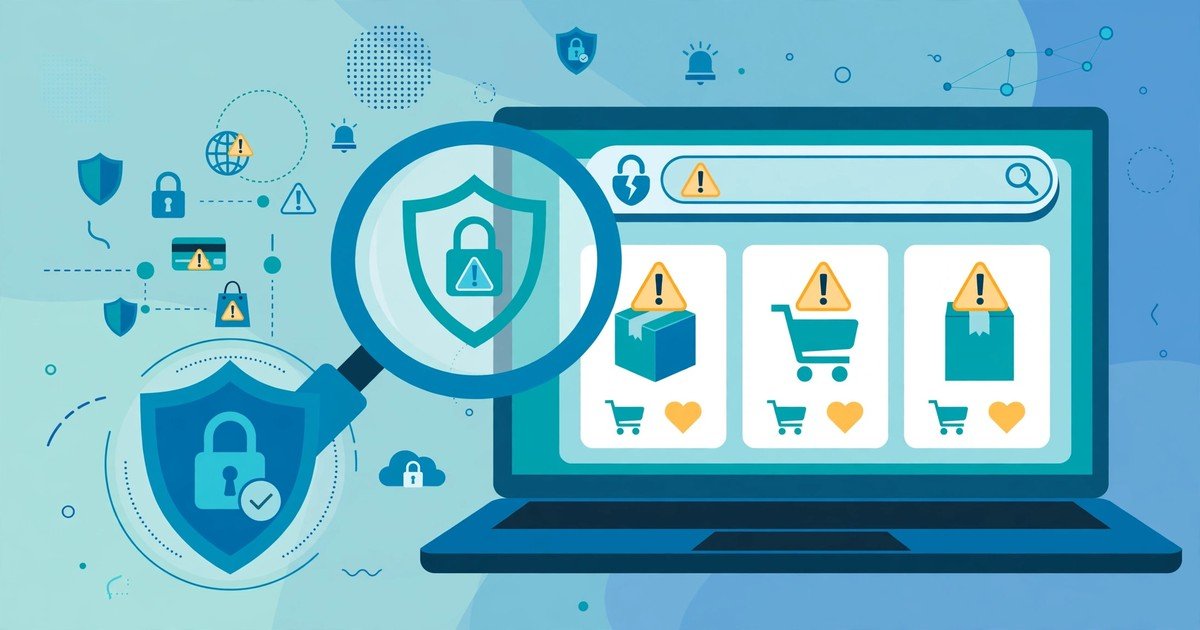
Fake shopping websites look more convincing than ever. They copy real brands, use stolen product photos, and run adverts on social media that lead straight to a checkout page. The short answer is this: a genuine website can be checked in about two minutes, and a fake one almost always fails at least one of those checks. This guide shows you exactly what to look for before you enter your card details.
You do not need technical skills to stay safe. You need a short routine, and you need to use it every time a deal looks surprisingly good. The checks below work for clothes, electronics, furniture, and any other product sold online in the UK.
Why fake shops are booming
Setting up a fake shop is cheap and fast. A scammer can register a domain, copy a real store design, and start running adverts within a day. Social media adverts do most of the work, because shoppers click from a feed they trust into a shop they have never seen before.
Artificial intelligence has made the problem worse. Product descriptions, customer reviews, and even customer service replies can now be generated in seconds. That is why a polished looking website is no longer proof that a business is real. The same tricks appear in AI scams doing the rounds in the UK, where convincing fakes are used to steal money and personal details.
Fake shops also exploit urgency. Countdown timers, “closing down sale” banners, and claims that stock is almost gone are designed to stop you checking. If a site pressures you to buy now, slow down. That pressure is itself a warning sign.
Check the web address closely
Start with the address bar. Look for misspellings, swapped letters, extra words, and odd endings. A fake version of a known brand might add a word like “sale” or “outlet”, or use a different domain ending than the real store. Type the brand name into a search engine yourself instead of trusting the link in an advert or email.
Check that the address matches the business you think you are buying from. If an advert promises a famous brand but the address is a string of random words, close the tab. Also be wary of long addresses stuffed with a brand name plus extra words, because scammers use that trick to look legitimate at a glance.
A padlock icon and “https” only mean the connection is encrypted. They do not mean the business is honest. Any scammer can get a padlock for free, so never treat it as a trust badge on its own.
Look for real company details
A genuine UK business normally gives you a way to contact it beyond a web form. Look for a real postal address, a phone number, and an email address on a contact page. Then test them. A phone number that never answers, an address that turns out to be a residential street on a map, or an email address on a free mail service are all reasons to pause.
For a UK limited company, check the name on Companies House. The free Companies House search shows whether the company exists, when it was formed, and what its registered address is. A company formed a few weeks ago, with no trading history, selling high value goods at huge discounts, deserves extra suspicion. This does not prove a shop is fake on its own, because new genuine businesses exist, but it is one useful piece of the picture.
Also read the returns policy and terms pages properly. Fake shops often have vague, copied, or contradictory policies. If the returns address is in another country, or the policy promises refunds with no conditions at all, treat that as a red flag.
Payment red flags
How a site asks you to pay tells you a lot. Be very cautious if the only options are bank transfer, gift cards, or payment through a messaging app. Those methods offer little or no protection if the goods never arrive. A genuine shop normally accepts cards or a recognised payment provider.
Paying by credit card gives you the strongest protection in the UK. Under Section 75 of the Consumer Credit Act, your card provider is jointly liable with the retailer for purchases between £100 and £30,000 made on credit card, if something goes wrong. Debit card payments may be covered by chargeback through your bank, but the rules and time limits differ, so check with your bank quickly if there is a problem.
Never pay outside the checkout system. If a seller asks you to send money directly after you made contact through a shop, a social media page, or a marketplace message, stop. That request is designed to remove the protections that a proper checkout gives you. Similar payment tricks appear in phishing, so it is worth knowing how to spot phishing emails in 2026 too, because fake shops and phishing messages often work together.
Too-good-to-be-true prices
A price far below every other retailer is the single most common sign of a fake shop. Scammers use impossible discounts to override your judgement. Before you buy, search for the same product on two or three well known retailers and compare. If one unknown site is selling it for half the price of everywhere else, assume something is wrong until proven otherwise.
The same rule applies to “everything must go” sales from brands that never discount that deeply. Genuine clearance sales exist, but they come from retailers you can verify, with a track record, reviews, and a real address. A brand new site offering 80 percent off a current product, with no history anywhere, is not a bargain. It is a trap.
Also watch for a shop that sells an odd mix of unrelated products, such as designer shoes, power tools, and jewellery, all at steep discounts. Real shops tend to specialise. A store selling everything, cheaply, is usually a template filled with stolen listings.
Quick verification tricks
You can verify most shops in a few minutes with these checks. First, search the shop name plus the word “scam” or “reviews”. A complete absence of independent reviews is suspicious for a shop claiming thousands of happy customers. Reviews that all appeared on the same day, use similar wording, or only appear on the shop’s own website should not be trusted.
Second, do a reverse image search on a product photo. If the same photo appears on many unrelated shops, or on the real brand’s website, the shop has probably copied its listings. Third, check the domain age with a free domain lookup tool. A shop claiming to be established for years but registered last month is lying about its history.
Fourth, remember the limits of HTTPS, as noted above. A padlock proves encryption, not honesty. Fifth, check social media pages properly. A page created recently, with few followers, generic posts, and comments switched off, is not a trustworthy presence, even if the follower count looks large. Fake followers are easy to buy.
If you run a small business, these same habits protect your company purchases too. A wider business security routine, covering passwords, backups, and staff training, is worth putting in place alongside these shopping checks.
If you already paid a fake site
Act quickly. Contact your bank or card provider straight away and explain that you believe the seller is fraudulent. Ask about a chargeback or, for credit card purchases over £100, a Section 75 claim. The sooner you report it, the better your chances of recovering the money.
Change any passwords you used on the fake site, especially if you reused a password elsewhere. If you entered card details, ask your bank whether the card should be replaced. Keep screenshots of the order confirmation, the website address, and any messages from the seller, because your bank may ask for them.
Report the site to help others. You can report a fraudulent website to Action Fraud through the Report Fraud service, and you can forward suspicious emails to report@phishing.gov.uk. If you called a number shown on the site, or you are worried about your bank account, call 159, the memorable number that connects you to your bank’s fraud team. If you clicked a link or entered details on a suspicious site, follow the steps in our guide on what to do if you click a phishing link.
FAQs
Does a padlock in the address bar mean a website is safe?
No. A padlock only means your connection to the site is encrypted. Scammers can get one for free, so a padlock never proves that a business is genuine.
What is the fastest way to check a new online shop?
Search the shop name plus “reviews” or “scam”, check its company details on Companies House if it claims to be UK based, and compare its prices with well known retailers. If any of those checks fail, do not buy.
Is it safe to pay by bank transfer to an online shop?
Bank transfer offers very little protection if the goods never arrive or the seller is fake. Use a card or a recognised payment provider instead, and avoid any seller who insists on bank transfer alone.
What should I do if a parcel never arrives from a suspicious shop?
Contact your bank or card provider promptly, keep your order evidence, and report the seller to Report Fraud. Do not keep chasing a seller who only replies with excuses while your chargeback window closes.
Can a fake website look exactly like a real brand?
Yes. Scammers copy logos, layouts, and product photos from real stores. That is why you should verify the web address and the company details, rather than trusting how professional the design looks.
Conclusion
Spotting a fake website comes down to a simple habit: verify before you pay. Check the address, look for real company details, compare the price, and use a protected payment method. Any one of those checks can save you from losing money to a shop that was never real. Take two minutes before every unfamiliar checkout, and share this routine with family members who shop online, because the people most at risk are often the ones in a hurry for a bargain.