
Technology: Explore What It Is, Its Impact & Top Trends in 2026
Technology is everywhere in the phone you hold, the apps you use, the cars on the road, and the medical breakthroughs saving lives. At its core, technology is the application of scientific knowledge to solve practical problems and make life easier. Derived from Greek words meaning “craft/skill” and “study/science,” it encompasses tools, systems, processes, and innovations that transform human life.
While many of us experience technology daily, understanding its purpose, evolution, and future direction helps us appreciate its role in society. From simple stone tools in prehistory to advanced artificial intelligence (AI) systems reshaping industries in 2026, technology has continually driven human progress. In this article, we’ll explore the history and types of technology, its impact on everyday life, and the top technology trends expected to define 2026, such as AI-driven systems, cloud evolution, and extended reality. Whether you’re a curious reader or a tech enthusiast following innovations, this guide offers a clear, engaging look at how technology works and why it matters.
Understanding Technology
What Is Technology?
Technology refers to the use of knowledge to achieve practical goals through tools, machines, and systems. It’s not just gadgets i,, it’s the processes and ideas that help humans solve problems, from building a wheel to designing smart software. Historically, early tools like stone implements were technology because they extended human ability to work and survive, and over centuries, this expanded into complex systems we know today, like the internet, medical devices, and artificial intelligence
Technology blends science, engineering, and creativity. Think of a smartphone not just as hardware, but as hardware, software, networks, and design working together to solve communication and productivity needs.
History & Evolution of Technology
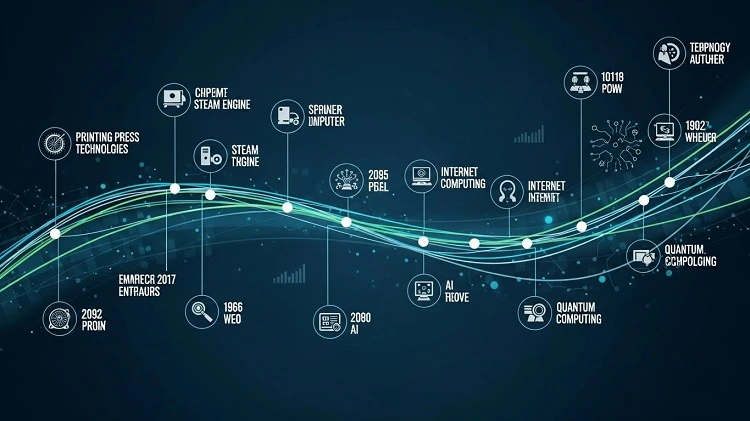
From the discovery of fire control and the wheel to steam engines, telegraphs, and modern computers, technology has shaped civilization across ages . In the 20th and 21st centuries, rapid advances like personal computing, the World Wide Web (invented by Tim Berners-Lee in 1989), and mobile networks revolutionized how we interact, learn, and work. His evolution is continuous;s each phase builds on prior knowledge, pushing society into new ways of living and working.
Types of Technology
Everyday & Consumer Tech
Technology permeates daily life: smartphones, laptops, smart home devices, and wearables make tasks more convenient. These tools handle communication, entertainment, shopping, banking, and more with ease thanks to advancements in hardware and software.
Information & Communication Technology (ICT)
ICT includes networks, servers, cloud computing, data systems, cybersecurity, and applications that manage and deliver information. It’s the backbone of digital li,fe from email and social media to online banking and remote work tools.
Industrial & Emerging Technologies
Automation in factories, industrial robotics, autonomous systems, and advanced manufacturing methods like 3D printing are reshaping production and supply chains.
How Technology Impacts Daily Life
Technology transforms communication, connecting people globally through instant messaging, video calls, and collaborative tools. It enables remote work and learning, especially post-pandemic, and improves access to healthcare via telemedicine and health monitoring devices. In transport, technologies like GPS, ride-sharing apps, and autonomous vehicles optimize movement and logistics.
Economically, tech stimulates growth by creating new industries and job roles while challenging traditional ones. Socially, tech reshapes culture, entertainment, and the way we access information every day.
Key Concepts in Technology Today
Innovation vs Invention
An invention is creating something new, while innovation applies inventions in ways that impact society, such as deploying AI to automate business workflows.
Digital Transformation
Businesses and governments use technology to transform processes, moving from manual to digital systems to increase efficiency, reduce costs, and improve customer experience.
Enabling Technologies
Technologies like AI, IoT, cloud, and quantum computing are considered enabling because they drive change across multiple industries.
Top Technology Trends and Innovations for 2026
AI-Driven Systems & Autonomous Agents
Artificial intelligence is shifting from passive tools to autonomous agents that can plan, make decisions, and execute tasks without human input. These have roles in customer support automation, marketing campaigns, and complex workflows in enterprise environments.
Cloud 3.0 & Edge Computing
Cloud computing is evolving into Cloud 3.0, supporting AI workloads, hybrid architectures, and edge systems, which process data closer to its source for speed and efficiency.
Extended Reality (XR) AR & VR
Extended Reality combines augmented reality (AR), virtual reality (VR), and mixed reality (MR). In 2026, XR will be used for training, remote collaboration, and immersive experiences that blend the digital with the physical world.
Green Tech & Sustainability
As energy consumption rises, green technology focused on sustainability, such as energy-efficient computing and renewable energy integration, becomes essential.
Quantum Computing & Digital Twins
Quantum computing is nearing practical applications in fields like drug discovery and logistics, while digital twins (virtual replicas of physical systems) help optimize operations in manufacturing and urban planning.
Future Connectivity: 6G & Next-Gen Networks
Emerging connectivity like 6G promises ultra-fast, low-latency wireless networks that will support advanced IoT, autonomous systems, and immersive services, although full deployment may extend beyond 2026.
Conclusion
Technology is not just about gadgets and software; it’s a force that reshapes human life and society. From its earliest forms as stone tools to today’s complex systems like AI agents, quantum computing, and next-generation connectivity, technology reflects humanity’s drive to solve problems and achieve new capabilities. It changes how we communicate, work, learn, and solve global challenges. In 2026, we’re witnessing a pivotal moment where technologies transition from promising concepts to applied realities that are reshaping entire industries and daily life.
Understanding technology’s basics helps us appreciate its impact and make informed decisions as consumers, professionals, and citizens. As emerging trends like autonomous AI systems and cloud evolution converge with growing concerns around ethics, privacy, and sustainability, embracing responsible innovation becomes crucial. Whether it’s improving healthcare outcomes, enhancing productivity, or creating immersive experiences, technology’s role will only deepen.
If you’re curious about the future, now is an exciting time to explore and engage with the innovations shaping our world. Stay informed, stay curious, and consider how you can leverage and contribute to technology in thoughtful and impactful ways.
FAQs
1. What exactly is technology, and how does it affect our daily lives?
Technology refers to tools, systems, and methods created by humans to solve real-world problems. It impacts communication, healthcare, transportation, education, and work productivity eveday every day. What are the top emerging technology trends to watch in 2026?
Key trends include AI autonomous systems, Cloud 3.0, Extended Reality (XR), green tech, and quantum computing innovation.
3. How is artificial intelligence shaping the future of work?
AI evolves from simple automation to intelligent agents that can perform end-to-end tasks, transforming jobs and requiring new skills in AI management and governance.
4. Why is Cloud 3.0 important for modern businesses?
Cloud 3.0 supports advanced AI workloads, hybrid models, and low-latency processing, making enterprise systems more scalable and intelligent.
5. What challenges come with adopting new technology trends?
Challenges include cybersecurity risks, privacy issues, ethical concerns, and job displacement, which require careful governance and skill adaptation.